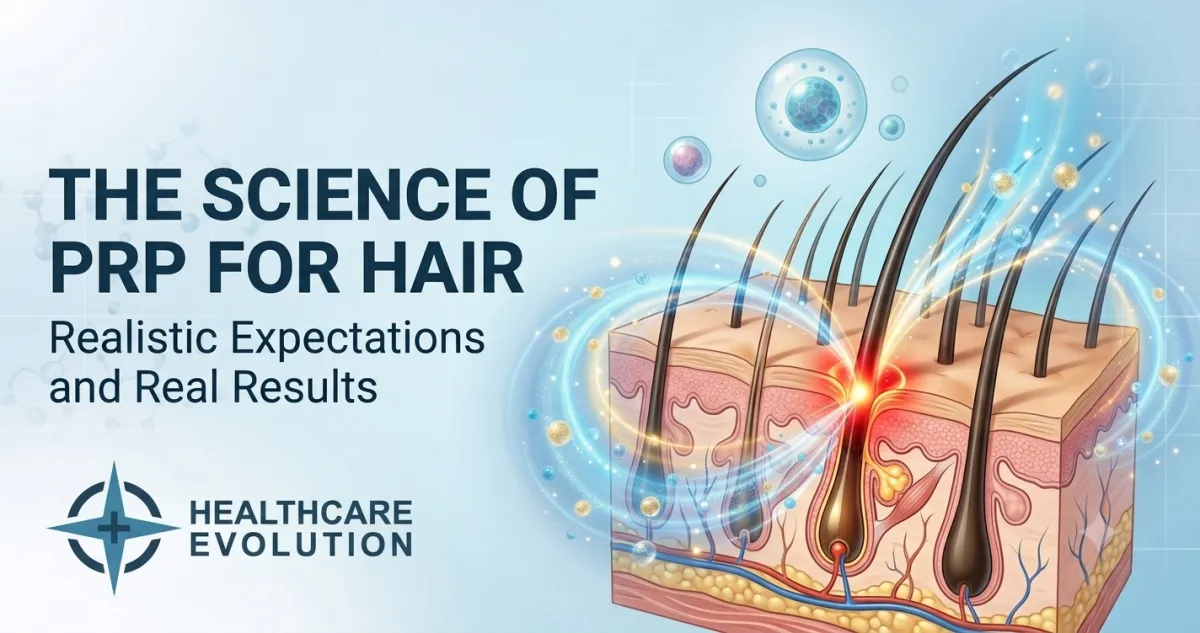
The Science of PRP for Hair: Realistic Expectations and Real Results
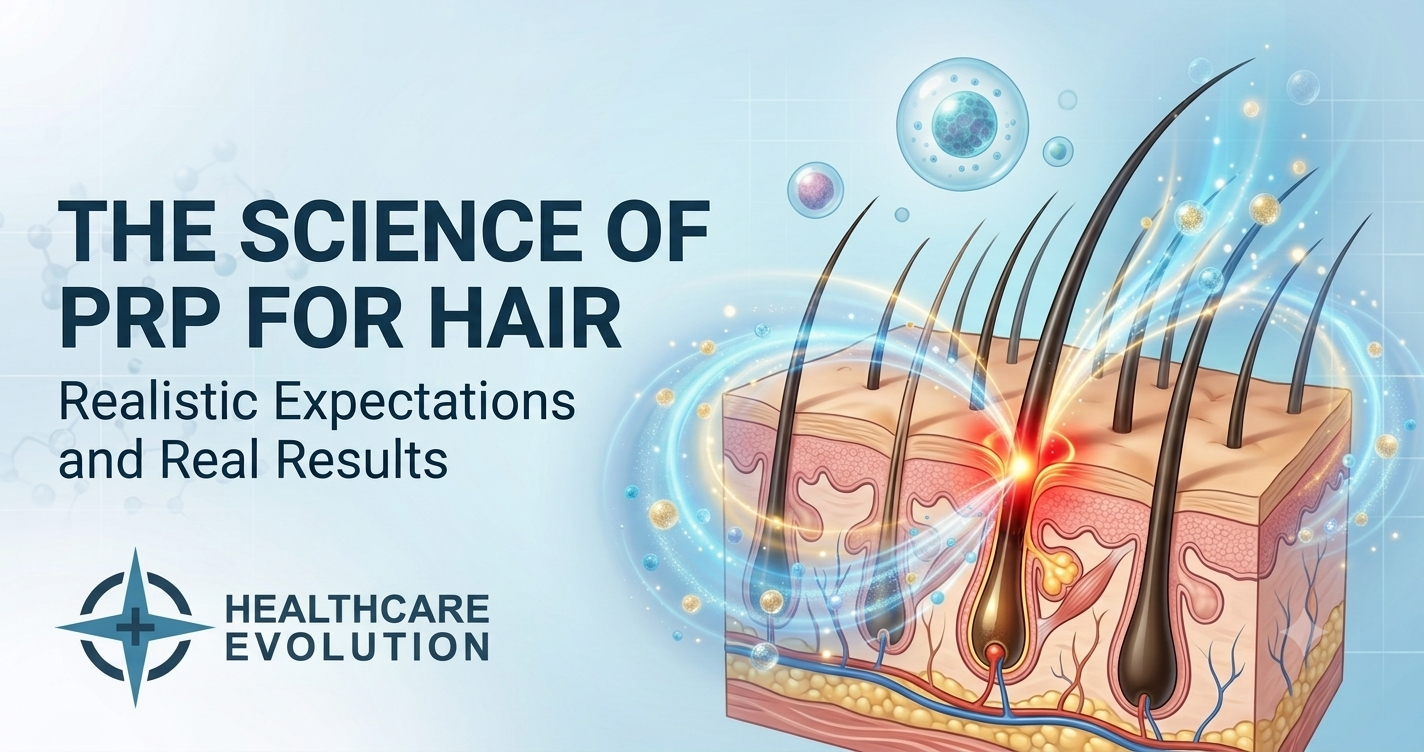
The Science of PRP for Hair: Realistic Expectations and Real Results
Healthcare Evolution | Hair Restoration | Florissant, MO (St. Louis area)
PRP has become one of the most talked about options for thinning hair, and for good reason. Platelet rich plasma, or PRP, uses the healing components already in your own blood to wake up tired follicles and support new growth. It is surgery free, minimally invasive, and grounded in the same regenerative science we use across our practice. At Healthcare Evolution in Florissant, just north of St. Louis, we believe good decisions start with clear information, so here is an honest look at how PRP works, what the science actually supports, and what you can realistically expect.
What Is PRP, and How Does It Work for Hair?
PRP starts with a simple blood draw, much like a routine lab test. That blood is placed in a centrifuge, which separates out the platelet rich portion of your plasma. Platelets are best known for helping you heal, and they carry growth factors that signal your body to repair and regenerate tissue. When this concentrated plasma is applied to the scalp, the goal is to nourish the follicle, improve blood supply to the area, and encourage follicles that have slowed down to become active again. Because it comes from your own body, nothing foreign is introduced.
What the Science Actually Supports
Research into PRP for hair has grown steadily, and the general picture is encouraging. Studies suggest PRP can help improve hair density and thickness for many people with early to moderate thinning, especially a common pattern known as androgenetic alopecia. It is important to stay balanced here. PRP is not a cure, and it does not create new follicles where none remain. What it can do is support and strengthen the follicles you still have. Results vary from person to person, which is why an honest evaluation matters far more than a blanket promise.
The Treatment Timeline: What to Expect and When
PRP is not an overnight fix, and understanding the timeline helps set the right expectations. Most plans begin with a short series of sessions spaced a few weeks apart, followed by periodic maintenance. Because hair grows slowly, visible change tends to unfold over several months rather than days. Many people first notice less shedding, then gradual thickening as the months pass. Consistency is what makes the difference, so following the full plan matters more than any single session.
Scalp Health and Nutrition: The Foundation PRP Builds On
PRP works best when the ground it is planted in is healthy. A well nourished scalp and body give your follicles what they need to respond. Simple foundations matter here: enough protein, iron, and the vitamins that support hair, steady hydration, gentle scalp care, and managing stress where you can. We often talk through these basics with patients alongside treatment, because supporting the whole picture tends to produce better and longer lasting results than any single step on its own.
Realistic Expectations
The most honest thing we can tell you is that PRP helps the right candidate at the right time. It tends to work best when thinning is caught early to moderately and healthy follicles remain, and it helps both men and women. It is not the right fit for everyone, and we will tell you plainly if another path makes more sense for you. You can see a real before and after in our hair restoration guide, including results from a member of our own team.
Frequently Asked Questions
Does PRP for hair hurt?
Most people feel only mild discomfort. The scalp can be numbed for comfort, and there is no operating room and no real downtime.
How many sessions will I need?
Plans vary, but many begin with a short series spaced a few weeks apart, followed by maintenance. Your evaluation determines the right schedule.
When will I see results?
Hair grows slowly, so most people notice changes over several months. Reduced shedding often comes first, then gradual thickening.
Is PRP safe?
Because PRP uses your own blood, the risk of reaction is very low. A proper evaluation confirms it is appropriate for you.
Take the Next Step
If you are curious whether PRP is right for your hair, the best next step is a simple conversation. Book a consultation with our team in Florissant, and we will give you an honest read on your options, with no pressure and no hard sell. Call 314-445-2121 or text 314-221-2406 to get started.
Healthcare Evolution | Precision that heals.


