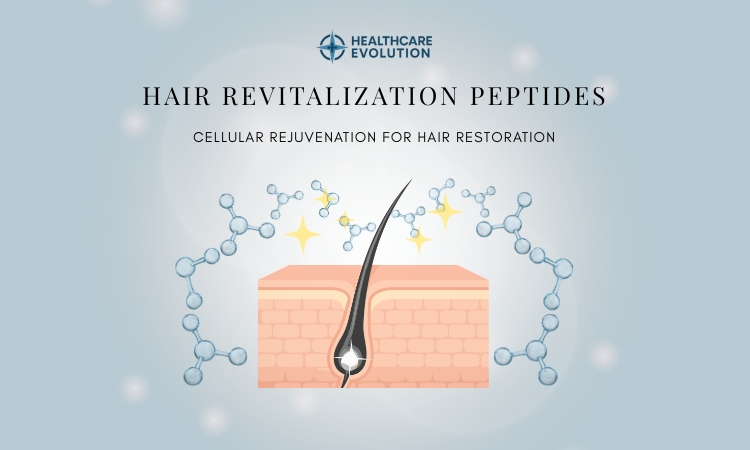
Do Peptides for Hair Loss Really Work?
Do Peptides for Hair Loss Really Work? The Science Behind Regrowth
Hair loss is more than a cosmetic concern. For many people, it’s tied to confidence, identity, and overall well-being. As regenerative medicine continues to evolve, peptides have emerged as a promising option, but an important question remains: do peptides for hair loss really work, or are they just another trend?
To answer that honestly, we need to look at the science behind peptides, how hair loss occurs at the cellular level, and where peptide therapy fits within the broader evolution of regenerative healthcare.

Understanding Hair Loss at the Cellular Level
Hair growth is a biologically complex process governed by cellular signaling, blood flow, hormones, and inflammation. Each hair follicle cycles through growth (anagen), transition (catagen), and rest (telogen). When this cycle is disrupted, often by genetics, hormonal changes, inflammation, or oxidative stress, follicles can shrink, weaken, and eventually stop producing healthy hair.
This is why modern regenerative approaches focus less on surface-level solutions and more on cellular communication and repair. Similar to how stem cells function as the body’s natural repair system, capable of renewing themselves and supporting damaged tissue (explored in more detail in What Is A Stem Cell?:
https://healthcare-evolution.com/post/what-are-stem-cells — peptides work by delivering signals that influence how cells behave.
What Are Peptides, and Why Are They Used for Hair Loss?
Peptides are short chains of amino acids that act as messengers in the body. They don’t replace cells or force growth; instead, they communicate instructions to existing cells — telling them when to repair, regenerate, or function more efficiently.
You may already be familiar with peptides from their use in skincare, joint health, muscle recovery, and cellular repair. Their role in hair regeneration is a natural extension of this science. Hair follicles, like all tissues, rely on healthy signaling pathways to stay active and productive.
This signaling-based approach aligns closely with the principles of regenerative cellular therapy, which focuses on improving how cells communicate and respond rather than masking symptoms. If you’re new to that concept, our article What Is Regenerative Cellular Therapy? explains how these therapies support healing from within:
https://healthcare-evolution.com/post/what-is-regenerative-cellular-therapy
How Peptides May Support Hair Regrowth
Research suggests peptides may help address hair loss through several mechanisms:
1. Supporting Hair Follicle Signaling
Certain peptides may encourage dormant or weakened follicles to re-enter the growth phase by improving communication between cells in the scalp.
2. Improving Blood Flow and Nutrient Delivery
Healthy hair follicles depend on oxygen and nutrients. Some peptides are studied for their role in supporting circulation and reducing localized inflammation around the follicle.
3. Protecting Follicles from Inflammation and Stress
Chronic inflammation and oxidative stress contribute to follicle miniaturization. Peptides may help regulate inflammatory responses, creating a healthier environment for hair growth.
Rather than acting as a quick fix, peptides work gradually, similar to other regenerative therapies designed to restore balance at the cellular level. This philosophy is central to regenerative medicine as a whole, which is outlined in What Is Regenerative Therapy?:
https://healthcare-evolution.com/post/what-is-regenerative-therapy
What Does the Research Say About Results?
Current studies and clinical observations suggest peptide therapy for hair loss is promising but not instant.
Many individuals experience:
Reduced shedding over time
Improved hair thickness and texture
Increased density in areas of early thinning
Results typically take 3–6 months or longer, and outcomes are most noticeable when peptides are used as part of a comprehensive regenerative plan rather than as a standalone solution.
This mirrors what we see across regenerative medicine: supporting the body’s natural repair processes produces more sustainable outcomes than forcing short-term change.
Before-and-After Insights: What to Expect
Patients often ask what peptide therapy results look like in real life. While individual outcomes vary, common trends include healthier-looking hair, improved scalp condition, and gradual thickening rather than sudden regrowth.
The most successful outcomes tend to occur when:
Treatment is started early
Consistency is maintained
Therapy is personalized to the individual
At Healthcare Evolution, we emphasize realistic expectations and education because true regeneration is a process, not a shortcut.
Where Peptides Fit in the Evolution of Healthcare
Peptides represent a shift away from one-size-fits-all solutions and toward precision, regenerative care. Instead of simply blocking hormones or covering hair loss cosmetically, peptide therapy aims to support the biological systems that keep hair follicles active and resilient.
This approach reflects the broader direction of modern healthcare, one that prioritizes cellular health, individualized treatment, and long-term wellness.
Are Peptides Right for You?
Peptide therapy may be especially beneficial for individuals experiencing early-stage hair thinning or those seeking a regenerative, science-backed alternative. A personalized evaluation is essential to determine the best approach based on your unique biology and goals.
Take the Next Step
If you’re curious whether peptides or other regenerative therapies could support your hair restoration journey, our team is here to help.
👉 Book a consultation with Healthcare Evolution:
https://healthcare-evolution.com/book-a-consult
Together, we’ll explore solutions rooted in science, guided by expertise, and designed to support healing from within.


